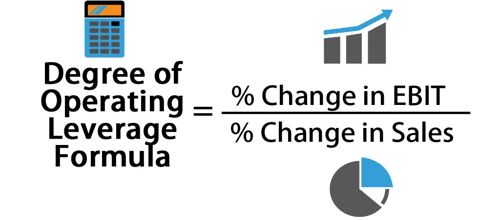
DOL is based on historical data and may not accurately predict future performance. Additionally, it does not consider the impact of external factors like market conditions and economic changes. 11 Financial may only transact business in those states in which it is registered, or qualifies for an exemption or exclusion from registration requirements. 11 Financial’s website is limited to the dissemination of general information pertaining to its advisory services, together with access to additional investment-related information, publications, and links.
What Is the Difference Between Operating Leverage and Financial Leverage?
The Degree of Operating Leverage Calculator is a valuable tool for financial analysts, investors, and business owners. It provides insights into a company’s sensitivity to changes in its operating income due to variations in sales. By understanding the DOL formula and using the calculator effectively, stakeholders can make informed decisions about investments and business strategies. High DOL values suggest potential for increased profits but also increased risk, while low DOL values imply stability but limited profit growth. In the world of finance, the Degree of Operating Leverage is a key metric for assessing a company’s financial resilience and profit potential.

How to Calculate the Degree of Operating Leverage (DOL)?
Use the calculator to fine-tune your sales approach for maximum profitability. Next, if the case toggle is set to “Upside”, we can see that revenue is growing 10% each year and from Year 1 to Year 5, and the company’s operating margin expands from 40.0% to 55.8%. Just like the 1st example we had for a company with high DOL, we can see the benefits of DOL from the margin expansion of 15.8% throughout the forecast period. In the final section, we’ll go through an example projection of a company with a high fixed cost structure and calculate the DOL using the 1st formula from earlier. In addition, in this scenario, the selling price per unit is set to $50.00, and the cost per unit is $20.00, which comes out to a contribution margin of $300mm in the base case (and 60% margin).
Can DOL be used to compare companies?
It’s always a good practice for businesses to calculate the degree of operating leverage periodically, ensuring they’re not overly exposed to the pitfalls while reaping the benefits. The company’s overall cost structure is such that the fixed cost is $100,000, while the variable cost is $25 per piece. The DOL essentially measures how sensitive a company’s operating income is to fluctuations in its sales volume.
How to Interpret DOL?
A company with a high DOL can see huge changes in profits with a relatively smaller change in sales. If you’re still having problems calculating the DOL of your business, you can always use our how to take advantage of student loan interest deduction and other helpful tools on CalcoPolis. The higher the degree of operating leverage, the greater the potential danger from forecasting risk, in which a relatively small error in forecasting sales can be magnified into large errors in cash flow projections. On the contrary, companies having low operating leverage may find it effortless to earn a profit when trading with lower sales. A lower DOL indicates that your profits are less sensitive to sales changes, allowing for more flexibility in pricing and promotions.
What is Degree of Operating Leverage – Its Formula, Calculation and What Does It Measure
- Another way to control this operational expense line item is to reduce unnecessary expenses, especially during slow seasons when sales are low.
- This ratio is often used when forecasting sales and determining appropriate prices.
- Variable costs vary with production levels, such as raw materials and labor.
- Here, the variable cost per unit is Rs.12, while the total fixed cost is Rs.1,00,000.
Common examples of industries recognized for their high and low degree of operating leverage (DOL) are described in the chart below. Yes, but ensure you’re comparing companies within the same industry or sector, as operating leverage can vary significantly between different types of businesses. If you have the percentual change (period to period) of sales, put it here. Otherwise, add the specific period data in the section “Period to period specific data” above. Finally, it is essential to have a broad understanding of the business and its financial performance. That’s why we highly recommend you check out our otherfinancial calculators.
It essentially highlights the sensitivity of a company’s earnings before interest and taxes (EBIT) to changes in its sales volume. The DOL measures the how sensitive operating income (or EBIT) is to a change in sales revenue. Degree of combined leverage measures a company’s sensitivity of net income to sales changes. Financial leverage is a measure of how much a company has borrowed in relation to its equity.
Additionally, investors should also keep an eye on this ratio when considering an investment in a company. Analyzing operating leverage helps managers assess the impact of changes in sales on the level of operating profits (EBIT) of the enterprise. Higher DOL means higher operating profits (positive DOL), and negative DOL means operating loss. After calculating the leverage by applying the formula, if the result is equal to 1, then the operating leverage indicates that there are no fixed costs, and the total cost is variable in nature.
Consider a company with fixed costs of $500,000, variable costs of $2 per unit, and selling price of $10 per unit. Running a business incurs a lot of costs, and not all these costs are variable. In other words, there are some costs that have to be paid even if the company has no sales.