A high turnover ratio indicates that management is being extremely efficient in using a firm’s short-term assets and liabilities to support sales. A business that consistently operates with a high working capital turnover ratio needs a smaller ongoing cash investment than its competitors to produce the same level of sales that they are generating. A low ratio can indicate over investment in current assets that are not supported by current sales. This can result in inventory obsolescence or accounts receivable bad debt writeoffs. If you want to see how your business performs compared to others, it’s important to focus on businesses in your same industry.
Impact On Profit Margins
- Alternatively, it could mean a company fails to leverage the benefits of low-interest or no-interest loans.
- Besides his extensive derivative trading expertise, Adam is an expert in economics and behavioral finance.
- Therefore, companies needing extra capital or using working capital inefficiently can boost cash flow by negotiating better terms with suppliers and customers.
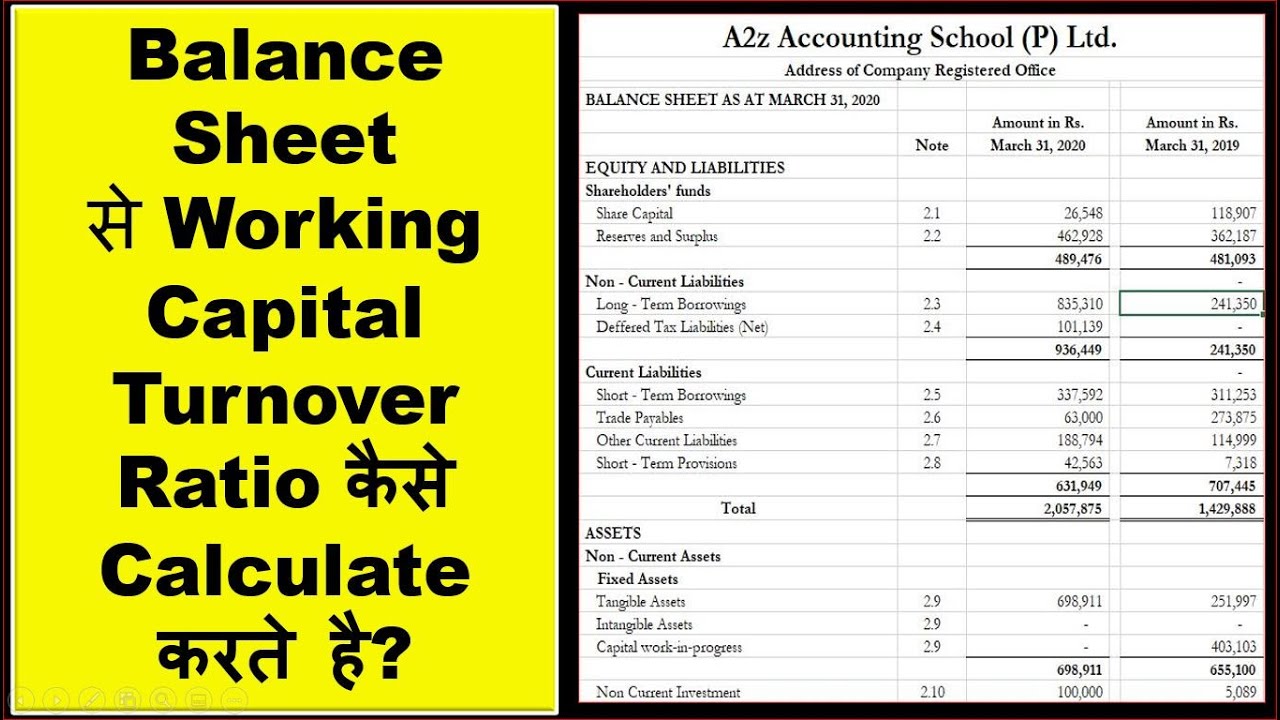
- Working capital, which is current assets minus current liabilities, is a balance sheet item that is why it is important to take the average of working capital.
- This situation may indicate inefficient use of working capital or potential liquidity issues, as the company is generating less revenue than the funds tied up in its current assets.
You can read more about our editorial guidelines and our products and services review methodology. High working capital brings a competitive edge to the industry, enhances flexibility during financial challenges, and reduces the likelihood of struggles with excess inventory. It’s worth noting that while negative working capital isn’t always bad and can depend on the specific business and its lifecycle stage, prolonged negative working capital can be problematic.
How to Calculate Your Working Capital Turnover Ratio
Comparing a company’s working capital turnover ratio to industry benchmarks can also provide insight into its profitability. If a company’s ratio is lower than industry averages, it may indicate that it is not using its working capital as efficiently as its competitors, and action may need to be taken to improve profitability. A low working capital turnover ratio may also indicate that a company is not generating enough cash from its operations to sustain its growth. In this case, the company may need to consider ways to increase its operating cash flow, such as reducing expenses or improving its sales processes.
The Working Capital Turnover Ratio Calculation in Practice
We are not a comparison-tool and these offers do not represent all available deposit, investment, loan or credit products. It might indicate that the business has too much inventory or isn’t investing excess cash. Alternatively, it could mean a company fails to leverage the benefits of low-interest or no-interest loans. Current liabilities encompass all debts a company owes or will owe within the next 12 months.
Increasing Operating Cash Flow
Double Entry Bookkeeping is here to provide you with free online information to help you learn and understand bookkeeping and introductory accounting. More often than not, a high working capital turnover is a good sign for a company as it means that the operation of the company is efficient. The dynamics of working capital turnover are different for different industries. Thus, it is critical amortizing bond premium using the effective interest rate method to compare the working capital turnover against its peers’ average instead of the market average. If keeping track of all these variables sounds complicated to you, don’t worry; just put all the numbers into our working capital turnover ratio calculator to get your answer. Adam Hayes, Ph.D., CFA, is a financial writer with 15+ years Wall Street experience as a derivatives trader.
These fields rely heavily on infastructure and machinery, which can slow down asset turnover. A company can improve its working capital by increasing current assets and reducing short-term debts. To boost current assets, it can save cash, build inventory reserves, prepay expenses for discounts, and carefully extend credit to minimize bad debts. To reduce short-term debts, a company can avoid unnecessary debt, secure favorable credit terms, and manage spending efficiently. A company’s balance sheet contains all working capital components, though it may not need all the elements discussed below.
This can lead to improved cash flow management, which can have a positive impact on profitability. By analysing the working capital turnover ratio, investors and analysts can gain a better understanding of a company’s liquidity and operational efficiency. A high ratio indicates that a company is efficiently using its working capital to generate sales, while a low ratio may indicate that a company is struggling to convert its working capital into sales.
There’s not a more obvious way to improve your sales to working capital ratio than by boosting sales. Don’t be passive if you’re not selling goods or services as you’d have hoped. However, an excessively high ratio could also imply that a company is not investing enough in its future growth. This indicates that for every dollar of working capital, the company generated $5 in sales, illustrating an extremely efficient use of working capital. Therefore, knowing your ratio is important because it signals necessary adjustments that need to be made to processes or products.
Our in-house research team and on-site financial experts work together to create content that’s accurate, impartial, and up to date. We fact-check every single statistic, quote and fact using trusted primary resources to make sure the information we provide is correct. You can learn more about GOBankingRates’ processes and standards in our editorial policy. GOBankingRates’ editorial team is committed to bringing you unbiased reviews and information. We use data-driven methodologies to evaluate financial products and services – our reviews and ratings are not influenced by advertisers.